How to start a mini excavator in extremely cold weather is less about turning the key and more about preparing the machine. Overnight frost can stiffen hydraulic oil, weaken a battery, and make diesel fuel harder to flow. Cold changes everything. A slow crank or a warning light deserves attention, not repeated attempts. This guide explains practical checks for the machine, the worksite, and the operator before a cold start.
Earthmoving-equipment author Keith Haddock’s work provides a useful perspective, paraphrased here rather than presented as a verified quotation: “Prepare the machine before asking it to work.” Start with the operator’s manual, since cold-start steps vary by model. Check the battery connections, fuel condition, engine oil, and coolant. Clear snow and ice from the steps, controls, air intake, and exhaust area. Use the machine’s approved preheating system, and allow it to complete its cycle. Then start the engine as directed and give it time to warm at the recommended idle. No shortcut helps. Avoid forcing controls or working the hydraulics hard while the oil is still cold.
Even careful preparation cannot guarantee an easy start in severe cold. A weak battery, unsuitable fluids, or a fuel-system issue may need qualified service. The details matter. This introduction sets up a step-by-step guide built around safe checks, model-specific instructions, and realistic expectations—not guesswork.
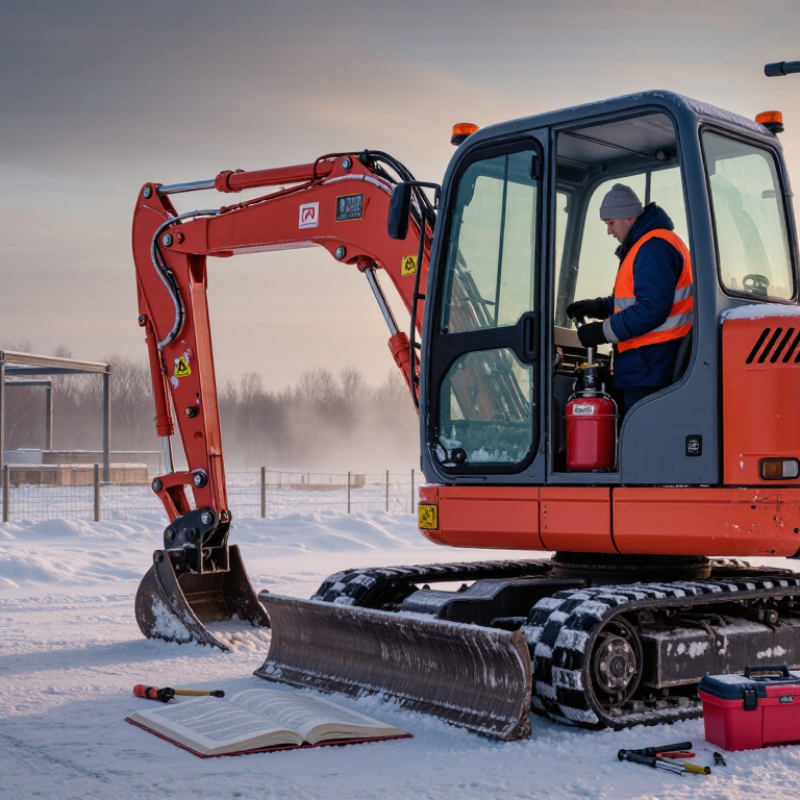
Before starting a mini excavator in extreme cold, check its operator’s manual for temperature limits and cold-weather procedures. Requirements vary by machine. Confirm that engine oil, coolant, and hydraulic fluid are rated for the expected temperature. Inspect the battery, terminals, fuel, hoses, and visible connections for damage, leaks, ice, or unusual stiffness. Check that tracks and attachment pins are clear of packed snow. A weak battery can turn a routine start into a long delay. Don’t guess at fluid grades or use improvised heating methods.
Prepare the site before climbing into the cab. Park on firm, level ground, clear snow and ice from steps, handholds, and windows, then check for hidden edges, soft ground, and overhead hazards. Keep people outside the machine’s working area. Visibility matters. Wear suitable gloves and boots, use the seat belt, and make sure controls are in neutral as specified in the manual. Start and warm the machine as directed; let warning indicators settle, then move controls gently rather than demanding full power immediately. Cold checks are not perfect: ice or a damaged hose may still be missed. Stop if alarms, leaks, or unusual sounds appear, and investigate before operating.
Before starting a mini excavator in severe cold, inspect the battery, terminals, and cables for corrosion, looseness, or cracked insulation. Cold is unforgiving. AAA’s cold-weather battery guidance estimates that a battery may deliver only about 40 percent of its normal cranking power at 0°F (-18°C), while the engine may need roughly twice as much starting power. Charge and load-test a weak battery before the shift; a dashboard light alone cannot confirm its condition. Check the engine oil against the machine’s manual. SAE J300 classifies winter oil by cold-cranking and pumpability tests, so the correct grade matters.
Check coolant concentration and condition with a suitable tester, then inspect the fuel-water separator and drain water as the manual directs. Water can freeze and restrict flow. Use diesel suitable for the expected temperature; cold-weather fuel can still plug a filter if its low-temperature properties do not match conditions. Look for leaks around hoses and fittings, especially after overnight parking. One overlooked detail: a clear sight glass does not prove every line is ice-free.
Test the cold-start system before cranking. Confirm the glow-plug or intake-heater indicator works, and allow the specified preheat cycle to finish. Do not crank continuously; follow the manufacturer’s limits and pause between attempts to protect the starter and battery. Keep hands clear of moving parts. I would not rush this check, even when the cab is cold and the work is waiting.
Use this checklist before starting in freezing conditions. The machine’s operator manual takes priority, especially for temperature limits, fluid specifications, and cranking intervals.
| Inspection Area | What to Check | Cold-Weather Guidance | Before Cranking |
|---|---|---|---|
| Battery and connections | Check battery charge, case condition, terminal tightness, and corrosion. Confirm that cables are undamaged. | Cold temperatures reduce available battery output; near −18°C (0°F), a battery may provide roughly half its usual cranking power, depending on its condition and type. | Charge or test a weak battery. Keep terminals clean and secure. Use only an approved jump-start or battery-charging procedure. |
| Engine oil | Check the level on level ground and inspect for contamination or an incorrect grade. | Use the viscosity and specification listed for the expected ambient temperature in the operator manual. Lower-temperature-rated oil can improve cold cranking when approved for the engine. | Do not start with oil below the safe level. Never choose a viscosity solely by guesswork. |
| Coolant and freeze protection | Check the coolant level when the engine is cold; inspect hoses and connections for leaks or damage. | Verify freeze protection with a suitable tester and confirm the coolant type and concentration specified for the machine. A common 50/50 ethylene-glycol mixture protects to about −37°C (−34°F), but actual protection varies by product. | Never remove a pressurized radiator or coolant-system cap while hot. Do not mix incompatible coolant types. |
| Diesel fuel and water separator | Check fuel level, fuel condition, filter condition, and the water separator, if fitted. | Use fuel suitable for the local winter temperature. Diesel cloud point and cold-filter plugging point vary; wax formation can restrict filters before fuel appears fully solid. | Drain water only as directed by the manual. Do not use gasoline or unapproved additives to thin diesel fuel. |
| Fuel filter and lines | Look for leaks, damaged lines, or signs of restricted fuel flow. Check whether the filter requires scheduled replacement. | A wax-restricted filter may prevent starting even when fuel remains in the tank. Follow the prescribed warming and filter-service procedure. | Do not use an open flame or high heat to thaw fuel lines or filters. Replace or service parts only as specified. |
| Glow plugs or intake heater | Check the warning indicators and confirm that the machine’s cold-start system completes its preheat cycle. | Preheat time depends on ambient temperature and machine design. Wait for the indicator or follow the operator-manual sequence; some systems continue heating during or after cranking. | Do not bypass the preheat system or use starting fluid unless the manufacturer explicitly permits it for that engine. |
| Hydraulic oil and hoses | Check the hydraulic-oil level and inspect hoses, fittings, and the area beneath the machine for leaks. | Confirm that the specified hydraulic oil is suitable for the expected ambient temperature. Cold oil flows more slowly and can increase system resistance. | After the engine starts, warm the system gradually at low engine speed and with gentle control movements, following the manual. |
| Machine and work area | Inspect for ice, snow, obstructions, and people near the machine. Check that the attachment is lowered or safely supported. | Cold conditions can reduce visibility and traction. Use the designated access points and maintain three points of contact when climbing on or off. | Secure the machine as directed, fasten the seat belt, and confirm controls are in the required start position before turning the key or pressing the start control. |
| Cranking and initial warm-up | Observe the instrument panel and listen for abnormal noises or warning alarms after starting. | Use the manual’s cranking limit and rest interval; repeated prolonged cranking can overheat the starter and discharge the battery. | If the engine does not start after the prescribed attempts, stop and diagnose the cause. Let the engine idle as specified, then operate controls gently until the machine is warmed. |
Safety note: Do not start or operate a machine with a fuel leak, damaged battery, unsafe coolant condition, or unresolved warning. Never warm a machine with an open flame. Follow the operator manual and applicable workplace procedures.
Before turning the key, park on firm, level ground and lower the bucket and blade. Clear packed snow from the steps, tracks, air intake, and exhaust outlet. Cold finds weak points. Check battery terminals for corrosion and confirm the battery is fully charged. SAE J537 evaluates cold-cranking performance at 0°F (-18°C), a useful reminder that a battery’s rated output matters in freezing conditions. Inspect engine oil, coolant, and hydraulic fluid against the machine manual; the wrong viscosity can slow cranking and movement. It is tempting to rush these checks. That is where small oversights happen.
Confirm the fuel is suitable for the expected temperature, and drain water from the separator if the manual directs it. The U.S. Department of Energy’s Biodiesel Handling and Use Guide explains that biodiesel cloud point varies with feedstock and blend, so cold-flow behavior should not be assumed. Use an installed block heater only as specified, and inspect its cable before connecting it. Keep hands clear of moving parts. After starting, let the engine stabilize, then move controls gently while the hydraulic system warms. Avoid high engine speed or sudden travel at first. A warm cab can make a cold machine feel ready before its fluids are.
Prepare the Mini Excavator for a Cold Start: understand how winter oil grades are tested at low temperatures.
SAE winter grades are tested for cranking performance at different low temperatures. These test limits are not guaranteed operating temperatures. Before starting, use the oil grade specified in the machine’s operator manual, check the battery and fluids, and follow the manufacturer’s cold-start procedure.
How to Start a Mini Excavator in Extremely Cold Weather 2026
Start the Engine According to the Manufacturer’s Procedure
Cold starts expose a weak habit: treating yesterday’s sequence as today’s rule. Park on firm, level ground, lower the attachment, engage the parking brake, and confirm the controls are in the specified position. Check the manual for the approved oil grade, fuel requirements, preheating sequence, and cranking limits. Use the indicated glow-plug or intake-heater cycle, if fitted. Do not guess or repeatedly crank; pauses protect the starter and battery. SAE J300 classifies engine oils using cold-cranking tests at -30°C for 5W grades and -35°C for 0W grades. These test temperatures describe oil performance, not a substitute for the machine’s operating instructions.
Tips: Watch the preheat indicator. Crank only for the time stated in the manual, then wait as directed. Once running, keep the machine at the prescribed warm-up speed and avoid sudden hydraulic loads until the fluids reach operating temperature. If it will not start, stop and check the manual’s cold-start troubleshooting steps. A slow start is frustrating. Guesswork can make it worse.
Before starting, clear snow from the steps, handrails, tracks, and engine-air intake. Check for ice around the pedals and travel levers. Sit down, fasten the seat belt, and confirm the controls are neutral. Cold gloves can make a familiar lever feel strangely stiff. Pause. Check again.
Use the machine’s operating manual for the approved starting and warm-up procedure. SAE J300 engine-oil classification sets cold-cranking test limits of −35°C for 0W oils and −30°C for 5W oils; these are test conditions, not a substitute for the specified oil grade. After starting, watch the warning indicators and let the engine stabilize. Move control inputs gently, then operate the boom and bucket through small, slow movements. Hydraulic response may lag in severe cold. Do not force a sluggish function.
Before travelling, test the service brake, horn, lights, and travel controls in a clear, level area. Keep bystanders well away. The U.S. National Weather Service wind-chill chart indicates frostbite can occur in about 30 minutes at a wind chill near −19°F. That matters when checking the machine outside: exposed hands lose useful control quickly. I still recheck the travel direction before moving; cold mornings make routine habits less reliable.
Check the operator’s manual for temperature limits and starting steps. Confirm the oil, coolant, and hydraulic fluid suit the expected temperature. Inspect the battery, hoses, fuel, and connections for damage, leaks, or ice.
Clear snow from steps, handrails, windows, tracks, and attachment pins. Park on firm, level ground. Look for soft patches, hidden edges, and overhead hazards. Keep people outside the working area.
Check for ice around pedals and travel levers. Sit down, fasten the seat belt, and confirm controls are neutral as directed. Cold gloves can make a familiar lever feel stiff. Pause. Check again.
Follow the machine’s manual. Watch warning indicators after starting, and let the engine stabilize. Move controls gently, then test the boom and bucket with small, slow movements.
Hydraulic response may lag in severe cold. Don’t force a sluggish function or demand full power immediately. Stop if alarms, leaks, or unusual sounds appear, and investigate before operating.
In a clear, level area, test the service brake, horn, lights, and travel controls. Keep bystanders well away. I still recheck travel direction; cold mornings make routine habits less reliable.
Wind chill near −19°F can cause frostbite in about 30 minutes. Wear suitable gloves and boots, and limit time outside during checks. Exposed hands can lose useful control quickly.
No. Ice or a damaged hose may still be missed, even after a careful inspection. Stop and reassess if anything feels or sounds unusual. A quick check is not a guarantee.
How to start a mini excavator in extremely cold weather begins with preparation and a careful safety check. Confirm that the machine is suitable for the expected temperature, choose stable ground with good ventilation, and keep people clear of the work area. Inspect the battery for secure connections and adequate charge, check that engine oil and hydraulic fluid are appropriate for cold conditions, and make sure fuel is clean and the tank has no signs of contamination. Examine the cold-start system and look for leaks, damage, or blocked air openings before attempting to start.
Follow the machine’s operating instructions for pre-start checks and the correct cold-start procedure. Avoid repeated or prolonged cranking, and allow the engine to warm gradually after it starts. Before moving, check the warning indicators and test the controls at low speed in a clear area. Do not begin work until the engine and hydraulic system respond smoothly and the machine is operating safely.

BTEra Excavator